
Early Pregnancy Problems
The normal signs of early pregnancy consist of cessation of periods, nausea with or without vomiting, breast tenderness, urinary frequency and fatigue, other symptoms can be a little more worrying. These include vaginal bleeding and abdominal pain or discomfort
Vaginal Bleeding
Bleeding in early pregnancy can vary from spotting to a heavy loss. Every woman who experiences vaginal bleeding in the first trimester of pregnancy requires an ultrasound scan.
Pelvic or Abdominal Pain
If the symptoms are mild and self-limited then it is very likely that they represent normal early pregnancy changes. However, if the pain is moderate to severe, persistent or progressive then it could represent an ectopic pregnancy or an impending spontaneous miscarriage. Again, every patient requires an ultrasound scan
What is an Ectopic Pregnancy?
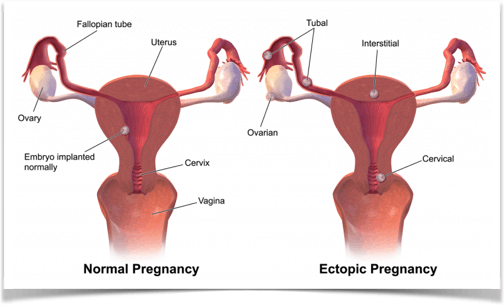
An ectopic pregnancy is a pregnancy developing outside the uterine cavity. Most ectopic pregnancies occur in one of the fallopian tubes, but it may also occur in the cervix, ovaries or elsewhere in the abdomen.
The diagnosis of ectopic pregnancy is based upon a combination of trans-vaginal ultrasound scans and sometimes a series of hormonal tests. In some cases an ectopic pregnancy can lead to serious internal bleeding. If the results show signs of an ectopic pregnancy, in the majority of cases, keyhole surgery is the chosen route but medication and expectant management are additional options. Essentially the treatment route for an ectopic pregnancy depends on the symptoms, the ultrasound findings and the level of the pregnancy hormone (beta-HCG).
Miscarriage
First trimester miscarriage or early pregnancy loss can be accompanied by vaginal bleeding and/or abdominal pain but it can also occur without any warning signs. In many cases, pregnancy tissue is expelled naturally from the uterus with contractions. Sometimes scans and blood tests may be required before a diagnosis of pregnancy loss can be made. An ultrasound scan will also determine whether the womb spontaneously removed all the tissue or if surgery may be needed.
Nausea and Vomiting
Nausea with or without vomiting is very common in early pregnancy and mild symptoms are considered to be normal. However, when the symptoms persistent and/or severe it can significantly affect a woman’s quality of life. Hyperemesis gravidarum is the term used to describe the severe nausea and vomiting in pregnancy, sometimes hospital admission is required. Fortunately, there are a variety of treatments available and it is advised to seek help early as the condition can deteriorate rapidly.
Ultrasound Scans
These are the most common ways to check your baby in early pregnancy. As well as being able to calculate your due date, ultrasounds can also see the exact location, the number of babies and the baby’s growth. Depending on the stage of the pregnancy, the scan will tell you different things. Often at around 6 weeks, ladies like to have a viability scan, this confirms the heartbeat, size and location of the pregnancy.
The Harmony Test
This is a relatively new prenatal test that analyses fragments of the fetal DNA from a blood sample taken from the mother. This test is offered after 11 weeks and tests for common chromosomal abnormalities including T21 (Down’s syndrome), T13 (Patau’s syndrome), and T18 (Edwards Syndrome).
As a specialist Doctor, I may be able to help you with many different conditions and problems.